Friday, December 4, 2009

IVF HOPE AFTER BRITISH BREAKTHROUGH ON EMBRYO SCREENING TECHNIQUE

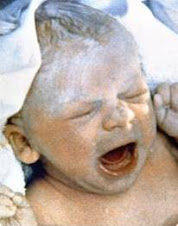
baby oliver with simon fishel

The first baby conceived with the help of a new egg screening technique which could offer hope to women for whom IVF has repeatedly failed has been born.
Oliver was born to a 41-year-old woman who had had 13 failed IVF treatments.
The new screening method, developed in Nottingham, allows a rapid analysis of the genetic material in fertilised eggs to check for chromosomal abnormalities.
The British Fertility Society said the technique was promising but that more research was needed.
Professor Simon Fishel, who led the team, said Oliver's arrival showed that the test could help couples who have repeatedly failed to become pregnant.
"All the team have been waiting for this very special baby to be born.
"Oliver's birth is an important landmark in shaping our understanding of why many women fail to become pregnant.
"Up to half of the eggs in younger women and up to 75% in women over 39 are chromosomally abnormal.
Array Comparative Genomic Hybridisation is used to screen eggs or embryos in an IVF cycle, evaluate all the chromosomes and select the most chromosomally normal embryos."
Before an egg is fertilised, it ejects half of its own set of chromosomes to leave space for the chromosomes coming from the father's sperm.
Miscarriages
These "spare" chromosomes are kept in a structure on the edge of the cell known as the "polar body".
Array CGH involves extracting the polar body and looking to see if there are too few or too many chromosomes.
It is believed that two out of three women fail at each IVF attempt because of chromosomal abnormalities in the implanted egg.
The team at Care Fertility Clinic have found a way of speeding the analysis of the genetic material they extract.
Two years ago US scientists announced that 18 women had given birth after having their eggs screened using a similar technique.
But in those cases the resulting embryos had to be frozen and re-implanted later.
The Nottingham team can get the results back in 24 hours which means that the mother can undergo IVF in the same cycle of treatment.
Oliver's parents had 13 previous failed IVF cycles and three miscarriages.
Eight eggs were tested and only two found to be chromosomally normal. One of those produced Oliver.
Great hope
British Fertility Society chairman Tony Rutherford said the technology offered much promise but the widespread use of it should await the outcome of further rigorous research.
He said there was no compelling evidence yet that pre-implantation genetic screening (PGS) tests, in which embryos are looked at for genetic abnormalities before they are implanted in the womb, improved the pregnancy rate or live birth rate.
He said: "All too often we see groundbreaking news about techniques that seem to offer great hope, but fail to live up to expectations when applied in widespread clinical practice."
Professor Peter Braude, head of the department of women's health at King's College London, said he was delighted that the mother had achieved her positive outcome after so many years of trying but he too sounded a note of caution.
"At the moment this can only be viewed as a potentially very lucky result," he said.
Stuart Lavery, a consultant gynaecologist and director of IVF at Hammersmith Hospital in London, said: "This technique is a very poweful tool that may allow us to detect which embryos of the many produced in an IVF cycle have the best chance of implantation and resulting in a birth.
"Clearly this is very early days, and our optimism needs to be tempered with caution until we have more evidence of the technique's safety and effectiveness.
"My own unit at the Hammersmith has recently been given an HFEA licence for microarray CGH and we look forward to contributing to this promising new field."

SOURCE: BBC.CO.UK

Saturday, November 21, 2009

Controversial egg modification technique could increase IVF success in older women

A controversial new technique to improve the quality of eggs from older women undergoing IVF is being developed by Japanese scientists.

Because the procedure involves using eggs from two women to create a single viable egg for fertilisation, it has sparked a media furore over the potential creation of what have been inaccurately dubbed 'three-parent embryos'.
The success rate of IVF declines dramatically as the age of the woman undergoing the procedure increases. One of the reasons for this is thought to be the accumulation of abnormalities in the cytoplasm (the jelly-like substance that surrounds a cell's nucleus) of eggs from older women. Researchers at the St Mother Hospital in Kitakyushu, Japan, took the nucleus out of an egg cell from an older woman undergoing IVF and transplanted into an egg donated by a younger woman (under the age of 35) which had first had its nucleus removed. The resulting egg had the nucleus from the older woman but the cytoplasm from the younger woman.
The research team presented their results at the American Society for Reproductiove Medicine meeting in Atlanta, Georgia in October 2009. Out of 31 eggs on which the procedure was performed, 25 appeared to have transplanted successfully and looked healthy and so were used for fertilisation. Out of these 25 eggs, seven (28 per cent) formed early-stage embryos after being injected with sperm. This was a dramatic improvement on the usual three per cent success rate for the fertilisation of eggs from older women.
In this case, the embryos were not implanted back into women, but team leader Dr Atsushi Tanaka told New Scientist magazine: 'If we could transfer these constructed new embryos, I believe the success rate would be high'.
Although the vast majority of human DNA is contained inside the nuclei of cells, a handful of genes - just 37 genes out of around 25,000 genes in total - are found in the mitochondria, tiny structures that exist in the cytoplasm and provide power to cells. The embryos created by Dr Tanaka and his team would inherit only these 37 genes from the younger donor of the empty egg and cytoplasm, and their remaining 25,000 or so genes from the woman who donated the egg's nucleus and the man who donated the sperm. For this reason, a similar technique of nuclear transfer has been proposed in order to enable women who have severe genetic disorders associated with mitochondrial genes to have children of their own without passing on their condition.
The use of this technique on eggs intended for implantation is currently banned in the UK. However, the new Human Fertilisation and Embryology Act recognises what it calls the 'devastating effects' of mitochondrial diseases and will allow for secondary legislation to sanction treatment of mitochondrial diseases should therapies be developed.
SOURCE: BIONEWS.ORG.UK

Monday, September 28, 2009

For the mother 13 times unlucky with IVF, a miracle boy at last

His mother has suffered the trauma of two miscarriages, an ectopic pregnancy and 13 failed IVF attempts.
Having been through all that this little baby boy can only be described as her miracle.


The child, identified only as Oliver, has become the first in the world to be born using an IVF technique that is said to more than double the chances of pregnancy.

Oliver, from the south of England, was born in July after doctors devised a way of counting the chromosomes in eggs, allowing them to pick only the best for fertility treatment.
After years of IVF disappointment, his mother, aged 41, had all but given up hope of ever having a baby of her own.

It's hardly surprising that her doctor says the woman and her husband - who have requested privacy - are still in shock at the birth.
Simon Fishel, of the Care group of fertility clinics, said: 'You get to a point where you don't believe it is going to happen to you.
'They are absolutely thrilled, as anybody would be, but believe it is almost more of a miracle in their case because of their history.
'Oliver's birth is an important landmark in shaping our understanding of why many women fail to become pregnant.'

So far, another six or so women have become pregnant thanks to the technique. But in time it could help many more women achieve their dream of motherhood.

Initial studies suggest it can more than double the odds of conception, cutting the cost and heartache of failed IVF attempts.
The technique, known as array comparative genomic hybridisation
Healthy eggs should have 23 chromosomes but many have more or less than this, greatly cutting the chances of pregnancy and raising the risk of miscarriage and of having a child with a condition such as Down's syndrome.

Up to three-quarters of miscarriages are thought to be due to embryos having too many or too chromosomes, with eggs from older women particularly likely to be problematic.
In trials, a more basic form of the technique doubled the pregnancy rate from 25 per cent to 50 per cent.

The latest version, pioneered at Care's Nottingham clinic, removes the potentially risky step of freezing and thawing the eggs or embryos and so could boast even better results.
Dr Fishel said: 'I really don't want to raise hopes unnecessarily but I do believe that because chromosomal abnormalities are so vast in cases of IVF failure that this technique will produce higher live birth rates.
'I am hoping it will double, or even more than double, the chances in most groups of patients.'
Optimising the chances of pregnancy would also allow doctors to reduce the number of eggs they implant in a woman at one time, cutting the odds of risky twin and triplet pregnancies.
The Care team is now trying out the method on embryos, something-that could increase the chances of success even further.
Although the method is mainly being used in women who have repeatedly failed at IVF, younger women could also benefit, as up to half of their eggs have chromosomal problems.
However, the £2,000 price tag, on top of the £3,000 or so for IVF, may put many off.
Experts urged caution about the development.
Tony Rutherford, chairman of the British Fertility Society, said that while the technology offers 'much promise' more research was needed to ascertain its value.

He said: 'The widespread use of this technology should await the outcome of such research to ensure we know which patients might benefit.'
Professor Peter Braude, head of the department of women's health at King's College London, said: 'I am delighted that this patient has achieved her positive outcome after so many years of trying.
'However we need to be cautious as to whether the new technique was responsible.

Monday, September 14, 2009

New IVF test increases pregnancy chances, say researchers

A new technique for screening embryos for genetic defects during IVF more than doubles the chances that the embryo will implant in the mother's womb, according to a pilot study by UK and US researchers.
The method, which has several advantages over an existing screening technique,
led to established pregnancies - meaning that foetal heartbeat was detected using ultrasound - in 78% of the 23 women who underwent the treatment. Genetic screening involves testing embryos produced during in-vitro fertilisation for abnormal chromosomes that could prevent the embryos from being carried to term.

Fertility doctors using the current technique take one or two cells at day three of the embryo's development, when it has eight cells. Once healthy embryos have been selected, they are implanted back into the patient's uterus. The technique, fluorescent in situ hybridisation, is controversial, with some studies suggesting that it provides no benefit or is counter-productive. The long-term effects of manipulating the embryo are unknown.

The new technique, called comparative genomic hybridisation (CGH), allows doctors to remove cells from the embryo at a later stage, when it is five days old and has more than 100 cells. Removing cells at this stage should be less damaging, and by analysing five or six cells the clinician can be more confident that the genetic abnormality exists in the whole embryo, and not just a few cells.

The researcher who has developed the new technique is planning to offer it in the UK for about £2,000, on top of the fee for IVF, and around the same as standard screening techniques.
"The pregnancy rates we've got so far are absolutely phenomenal," said Dr Dagan Wells at Oxford University and Reprogenetics UK, who led the study. "We're ready to begin a trial in the UK, and we have a couple of licence applications in to the Human Fertilisation and Embryology Authority to start offering CGH to patients." The HFEA is the UK's regulator of fertility clinics.

Dr Mandy Katz-Jaffe at the Colorado Centre for Reproductive Medicine, near Denver, who is part of the team, said: "The patients who are going through this knew this was their last chance of conceiving without going for donor eggs. They have a poor prognosis, with multiple failed cycles. The effect on those patients who have conceived has been beyond anything I can describe." Wells's team tested the CGH method in 23 women aged 30-42, and transferred 50 embryos. After screening and embryo transfer, 20 of the women became pregnant
(foetal heartbeat confirmed by ultrasound).

Wednesday, August 5, 2009

Better infertility treatments may help many to become parents

An advertisement which said "Choose from a bevy of healthy super-ovulated women to make your family complete" encouraged Audrey and Derek (names changed), residents of New Castle, UK, to go doctor shopping for a baby across four continents. Finally, they zeroed in on Dr Aniruddha Malpani, who runs the Malpani Infertility Clinic in Mumbai.

Audrey was on the verge of a nervous breakdown, having gone through multiple cycles of fertility treatment without any results. The couple had spent nearly 50,000 pounds in the eight years that they had been desperately trying for a baby. From swanky doctor studios they had even done the rounds of astrologers, herbal doctors and miracle-promising mendicants, driven by a single-minded obsession to become parents the biological way.

This cycle of hope-disappointment-hope was finally broken when they had Derek Jr. through In-Vitro Fertilisation (IVF) treatment in Mumbai.

Audrey and Derek are one of the many childless couples who come to India with the hope of going back home with their very own bundle of joy. Fertility tourism is big business now - the industry reportedly brings in hundreds of millions of dollars into the county. In fact, reports also suggest that the number of such cases has more than doubled in the last three years. The reasons: pocket-friendly treatment, world-class heath care facilities, a large base of English-speaking doctors, relatively fewer legal hurdlest the list is long. Dr Vibha Bansal, a Delhi-based gynaecologist, elaborates, "Fertility tourism has received a great deal of media attention of late. The cost of IVF in the West is astronomical and countries enact laws that drastically curtail women's access to assisted reproduction. However, countries like Thailand, Russia, China and India, where such treatments are easily accessible, see people not only from the developed world seeking treatment but also from places like Nepal, Bhutan and Afghanistan, where such options either do not exist, entail long waiting periods or are not of a satisfactory quality." She adds that the government has made things easier by not cluttering the space with too much legalese. According to Dr Malpani, "IVF, embryo adoption and egg donation are very popular and a major reason for this is its cost effectiveness." Take a look at the monetary contrast: At private clinics in the US, which do 70 per cent of all IVF treatment, costs can run up to $18,000 a cycle. Indian clinics offer the same at around $7,200. And to make the deal even more irresistible, many fertility centres offer package deals, throwing in plane tickets and hotel stay as well.

Other than the cost factor, Dr Malpani believes "foreigners choose India because doctors here are known to be more caring". Also, while British clinics may allow doctors to implant only two embryos in a surrogate's uterus, in India this can go up to six embryos at a time - increasing the chances of conception. But Dr Amudha Hari, Consultant Gynaecologist and Laparoscopic Surgeon in Chennai, doesn't see this as positive development.

She believes that there will always be doctors who agree to treat women deemed too old or too overweight by western standards for IVF, never mind the resultant medical complications. Which is why a patient must do a thorough recce and demand to get all his/her questions answered before going in for treatment. "Infertility is like a chronic illness and couples invest a lot of time, energy and money to fulfill their desire of building a family," says Dr Hari.
After three failed rounds of IVF treatment, Bhaskar and Anita, Non Resident Indians (NRIs) in the US, found the answer to their problem in an advertisement. It led them to Nisha, 23, from Nagapattinam, Tamil Nadu, who was willing to be a surrogate. Everything seemed compatible, she was of the same build and skin colour, except for the fact that she was not married. The issue posed an ethical dilemma for the couple but it was resolved when they were convinced that she was not under any duress but wanted to fund her education to be a nurse. Anita sent her Rs 20,000 every month until the baby was born. She even monitored Nisha's diet and doctor's visits. Their son Rohan's birth, says Anita, was "nothing short of a miracle. We had lost all hope of becoming parents and are now considering having another child after three years, the same way."

Infertility treatments, whether through IVF or surrogacy, creates families. In the process, they also help surrogates find stability in life. In fact, surrogacy has helped poor people pay off debts and get out of the vicious cycle of poverty and, in Nisha's case, get her an education. But, unfortunately, this exercise is not all about gains. If driven solely by commercial interests, fertility treatments can have dangerous consequences. There is always the question of high-risk pregnancies. Sometimes women have to go through repeated surrogacies, getting injected with hormones and the like without proper medical surveillance. All this means compromising dangerously with their health.
Dr Hari recalls a case where a woman in a Mumbai slum had been pushed by her husband to attempt surrogacy for the 18th time. The husband had made this into a kind of domestic enterprise, albeit a failed one, since the poor woman suffered from tuberculosis and was unable to deliver a child successfully. Luckily, a local NGO got a wind of what was going on and took her into a rehab where she is now recovering.

Besides the health risks, there is the issue of adoption. "The many steps involved in adoption once the child is born can be a problem," says Dr Hari. The Indian Council of Medical Research has not issued any guidelines to help deal with foreign clients using Indian surrogates. So the child has to be adopted under Indian law and all procedures outlined in the Hague Convention on inter-country adoption have to be adhered to.

Experts are quick to point out that the global capital generated by the burgeoning fertility tourism market may thwart any concerted international response to the inequities and exploitation that arise in this context. The key to ensuring that the treatment process is relatively hassle-free is to choose the right clinic, one that lays down protocols and guidelines, advises Dr Hari.

Doctor shopping can be a very taxing experience. However, a welcome trend is the easy availability of information on the Internet, making it possible for potential clients to connect with doctors and seek referrals. Blogs and e-mail are handy tools in this regard. However, Dr Abha Majumdar, Head Ultrasound at the IVF Unit in the New Delhi-based Sir Gangaram Hospital, believes that the entire fertility tourism debate is over hyped. She says that the majority of those reaching out to her or those referred from other clinics are Indians (including NRIs) - foreigners make up just 10-15 per cent of that number.

SOURCE:NATIONITTFAQ.COM

Wednesday, June 24, 2009

REAL FACTS ABOUT EGG DONATION

It’s becoming more the norm than the exception: women who are giving birth in their late 40’s and early 50’s.
Actress Geena Davis gave birth to twins at 48; Jane Seymour gave birth at 45; Cheryl Tiegs at 52.


Yet statistics show that once a woman reaches the age of 40, her fertility rate is pretty low. That’s why many women seek an egg donor for help.
What is egg donation? I took a closer look at the procedure and the female donors who are changing lives.

Pick up almost any college newspaper and you’ll see the ads seeking egg donors like this 24-year-old grad student who doesn’t want us to use her name.
Earlier this year at a clinic out-of-state, she donated 28 of her eggs, and she says she’s ready to do it again.
“I’m helping someone and they appreciate it,” she said.

The fact is, in a society where more and more women are waiting longer to get pregnant, egg donors like her are desperately needed.
Dr. Michael Steinkampf is the founder of Alabama Fertility Specialists, ranked among the top 25 IVF clinics in the country for women under age 35 by fertilitysuccessrates.com.
He says that when it comes to getting women pregnant, egg donation is the most successful form of invitro fertilization.
“This has become an important part of reproductive life in the United States because more women are working, more women are deferring their first pregnancy, and so more women are finding themselves with difficulty conceiving and in their mid 30’s or early 40’s and often the best treatment for them is egg donation,” Dr. Steinkampf said. “About 10 percent of all the invitro fertilization cycles in this country are done with eggs donated by another woman not the infertile woman herself.”

The problem is—there are more women needing eggs than donors. In Alabama, the average wait period for a woman to receive donated eggs is six months. In other states, up to two years.

And being an egg donor is a commitment. You must be in your early 20’s—and be no older than 32. You have a spotless medical history and agree to a strict medical regimen, including daily injections of fertility drugs to stimulate the ovaries to produce eggs and an outpatient procedure under sedation to retrieve them.

Complications are unlikely, and Dr. Steinkampf said the procedure won’t affect a donor’s egg supply.
“Taking fertility drugs being an egg donor it doesn’t use up your eggs any faster than what would normally be diminished,” Dr. Steinkampf said.But the concern for some is the lack of follow-up once a donor walks out the door.

Debra Spar is the author of “The Baby Business.” She says a national registry is needed to track the health of egg donor and ensure that egg donation is safe.
“There’s a difference here between asking people to undergo a procedure that’s about their own health and asking people to undergo a procedure that is directed toward somebody else.” Spar said.

But in countries like Canada where regulations have been in place since 2004, egg donation has dropped dramatically by 50 percent.
And while some doctors admit a registry makes sense, they point to legal and privacy issues as roadblocks.

Dr. David Adamson of the American Society for Reproductive Medicine said “We have to be very careful in our country that we don’t discriminate against the infertile and don’t restrict the reproductive choice simply because it’s about reproduction and the reality is that there have been tens of thousands of babies born tens of thousands of donors.”
And for many donors that’s what it’s all about: helping others experience the miracle of life. In some states, egg donors can earn up to $20,000 dollars per egg donation.

Alabama Fertility Specialists pays its donors $3,000.
Medical guidelines suggest a woman can make six donations in her lifetime.

SOURCE: NBC13.COM

Tuesday, May 19, 2009

Tips for In Vitro Fertilization - IVF

Arm yourself with info, but don’t get alarmed. Our IVF doctor gave us a sheath of info and consent forms, and some of it revolves around the possible hazards of the egg retrieval and implantation surgeries. They list the possible problems (infection, intestinal punctures) and say “this is not to alarm or scare you!” One tip for IVF is to get all the info you can…but don’t let it freak you out.

Talk to couples who’ve tried IVF. When you get first-hand experiences, you’ll have more info than you ever wanted! To connect with other couples coping with infertility, ask your fertility specialist if they know of any support groups in nearby hospitals or communities. If you’re brave enough, you can ask your friends and family…and find blogs or websites like these!

Read fertility books. Current books about IVF, donor sperm, IUI, and natural treatments for infertility are great ways to learn about the procedure. The more you know about IVF, the more comfortable you’ll feel, which is why these tips for in vitro fertilization are so important.
Read Fertility Plus’ article called IVF Hints. I didn’t agree about the “don’t talk to your partner about his role, as this causes stress” part, but I think it depends on each couple. Everyone copes with infertility differently! If stress leads to performance anxiety, then by all means keep him calm…but if he’s not involved in the sperm donor process, then talk as much as you need!

Do a mock IVF transfer? This is one of the tips for in vitro fertilization suggested by Fertility Plus, but I don’t think we’ll do it. It may be good in theory, but I suspect it’ll cost more time, money, and energy than I can spare. A mock IVF transfer can give the fertility specialist an idea of the depth of your uterus, so when the real time comes, they’re ready.
Be prepared for anything. I’m prepared for pain, discomfort, mood swings, and the fact that this IVF could lead to pregnancy…or another disappointment. I’m prepared for things I can’t even fathom right now! I’m ready for anything.

Plan something fun for after the transfer! Some fertility specialists say to relax right after the egg and sperm are placed, while other say it’s not scientifically proven that increases the success of in vitro fertilization. My tip for a successful IVF is to rent a few of your favorite or new DVDs, make popcorn, snuggle up with your sweetie, and take a day or two off! Give yourself something enjoyable to look forward to.

Plan something fun for after the pregnancy test. If my in vitro fertilization isn’t successful, I’m getting laser eye surgery. Having 20/20 or better vision isn’t as good as a baby, but at least it’s something to look forward to!

Powered By
widgetmate.com
Sponsored By
Digital Camera